

Every human rights story begins with a risk. Not only the risk of speaking up, but the quieter one that follows after someone decides their experience can no longer stay unspoken. It’s the risk of how their truth will be told and carried by others.
Long before there is a statement or a report, there is someone who has already measured the cost of sharing their experience, weighed it against the cost of staying silent and decided to step forward anyway. By the time their story reaches us, it carries layers of risk, history and resilience that deserve more than shocking headlines and broad claims.
As a Public Relations agency, the way we write or speak about these issues influences how the public understands them and whether we’ve told these stories with care for the people at their centre.
This is why messaging matters.
Key Considerations
Once we recognize the weight of holding someone’s truth, the next step is to look closely at how we share their experience. The words we choose, the context we provide and the habits we rely on all shape the story that reaches the public. Several key considerations can help ensure that our work supports, rather than distorts, the realities people are living.

Humans over numbers
Behind every number is a person whose lived experiences deserve to be centre stage. Statistics complement the story; they don’t replace it. Your audience should walk away understanding who is affected and why it matters, not just the scale of the issue.

Clarity over jargon
Human rights issues are often complex, but the language used to describe them shouldn’t be. Legal and technical terms can distance readers and weaken the overall message. Clear and plain language widens access and ensures the focus stays on the issue at hand, not on decoding the message.

Lived experience over broad narrative
Don’t let polished copywriting overshadow the voices of those living the reality you are describing. Integrating firsthand accounts grounds the work in authenticity and respects the agency of those most affected. Their stories provide the depth and credibility that broad narratives can’t.

Hope over fear
Communication around Human Rights issues often leans toward crisis and catastrophe to pull people in. While fear can draw attention, it rarely sustains it. A balanced approach both acknowledges harm and shows that change is possible. This empowers those affected while inspiring the audience to be active participants in making the change a reality.

Cultural sensitivity over generalization
Human rights contexts vary by culture, history and community. Effective communication recognizes that one experience or solution doesn’t speak for all. Careful attention to these factors strengthens accuracy, reduces misinterpretation and above all, honours the perspectives of those whose lives are at the centre of the story.
Our Approach
At 50th Parallel, we use strategic communications to command equity and presence in the world. Our work puts people first, ensuring that stories are told with care, accuracy and cultural respect. The following examples showcase how we bring this human-centred approach to our clients:
ʔahʔiiḥčp ʔukʷił ʔiqḥmuut (Honouring our Ancient Ones)

c
Using archaeological research, scanning technology and oral histories, this project was dedicated to locating missing children who attended the Ahousaht Indian Residential School on Maaqutusiis (Flores Island) and the Christie Indian Residential School on Hilth hoo is (Meares Island). We supported the first phase of this project, which aimed to share insights from the initial research and scanning with former students, families and the public on ʕaaḥuusʔatḥ (Ahousaht) First Nation ḥaaḥuułi (territory) on Maaqutusiis (Flores Island, BC).
The results:
- Integrated the Nation’s traditional language across all communications and included a one-pager in the media kit to guide proper use in media coverage.
- Shared project details with former students and the local community before public release, giving priority to those most affected.
- Referred to former students as “Warriors,” reflecting community values and lived experiences.
- Avoided publishing statistics, keeping focus on the community members impacted.
Connect Fund
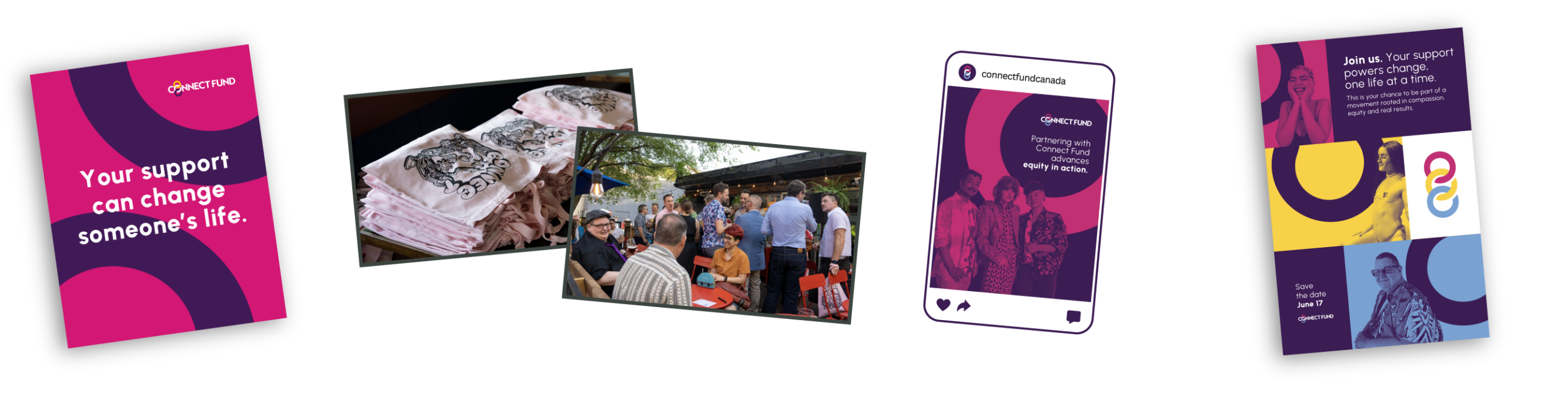
Connect Fund is a non-profit organization that funds access to gender-affirming and transition-related care for trans, non-binary and gender-diverse people in Ontario and Alberta. It was created in response to increasing gaps in care, long waitlists and financial barriers that prevent individuals from accessing the support they need. We partnered with Connect Fund to support their fundraising efforts, collaborating on messaging, sub-branding and communications materials ahead of a major fundraising event.
The results:
- Built clear, straightforward messaging that centred those most affected and showed exactly how donors could help remove barriers to care.
- Used imagery that reflected the range of identities within trans, non-binary and gender-diverse communities, ensuring people saw themselves represented accurately and with care.
- Used inclusive language across all materials to ensure the community felt seen, represented and safe.
Xyólhmet ye Syéwiqwélh Project (Taking Care of our Children)
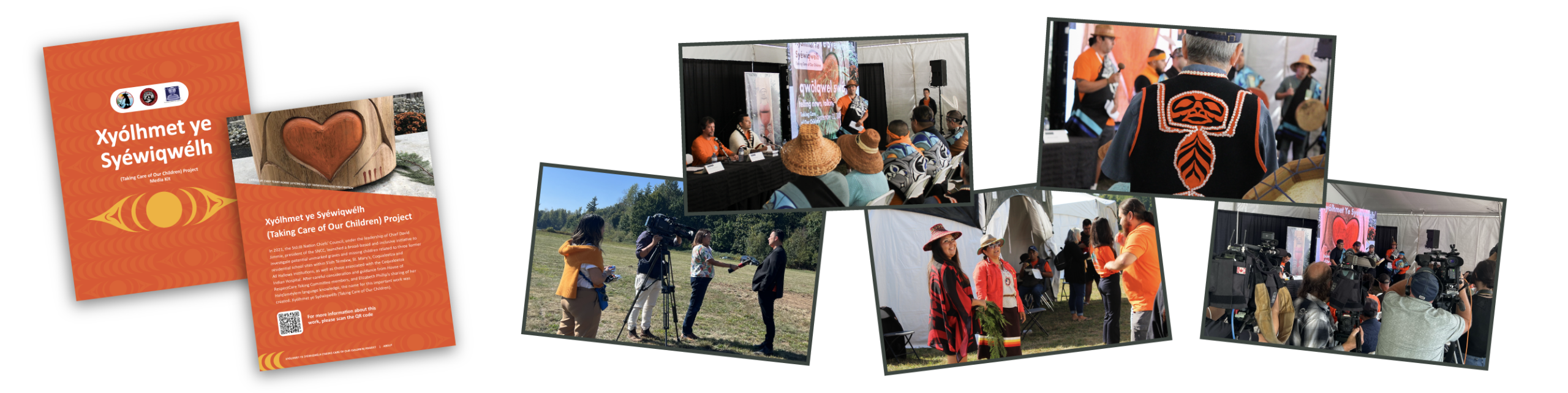
The Stó:lō Nation Chiefs’ Council (SNCC), led by Chief David Jimmie, initiated a comprehensive project in response to the knowledge of unmarked graves in former residential school cemeteries. Phase 1 of this endeavour was named the Xyólhmet ye Syéwiqwélh (Taking Care of Our Children) project and we were approached to support the initiative’s communications and media as they were preparing to announce preliminary findings.
The results:
- Developed a media kit with the inclusion of project facts and information on the Nation’s traditional language to ensure all public messaging respected community protocols and language.
- Provided training and communication guides to support key personnel in sharing deeply emotional information with their community.
- Monitored media coverage to ensure accuracy of information and liaised with media to correct any errors.
We’d love to hear your story
When we communicate about human rights, we are honouring lived experiences, respecting truth and helping others understand why those truths matter. Done well, this work creates space for understanding and it brings people closer to the realities that are too often overlooked.
At 50th Parallel, we believe thoughtful, human-centred communication can shift conversations in meaningful ways. If your organization is looking for support grounded in clarity, compassion and cultural awareness, we are here to help. Together, we can shape narratives that move people toward understanding and action.